Caring for naturally dyed pieces
How to wash, dry and store naturally dyed pieces. What to expect from colour evolution over time.
Natural colour is alive: what this means in practice
Naturally dyed pieces evolve with use. A fabric dyed with indigo becomes softer and more veiled where it is worn, while pieces dyed with tannins tend to deepen in tone over time. Understanding these changes means recognising the beauty of a living colour, one that follows the story of the piece and of the person who wears it.
How to wash
The universal rule for naturally dyed pieces is gentle, cold washing. Hot water opens the fibres and speeds up colour loss. Use neutral soap or detergent; avoid soaps with enzymes, bleach or optical brighteners.
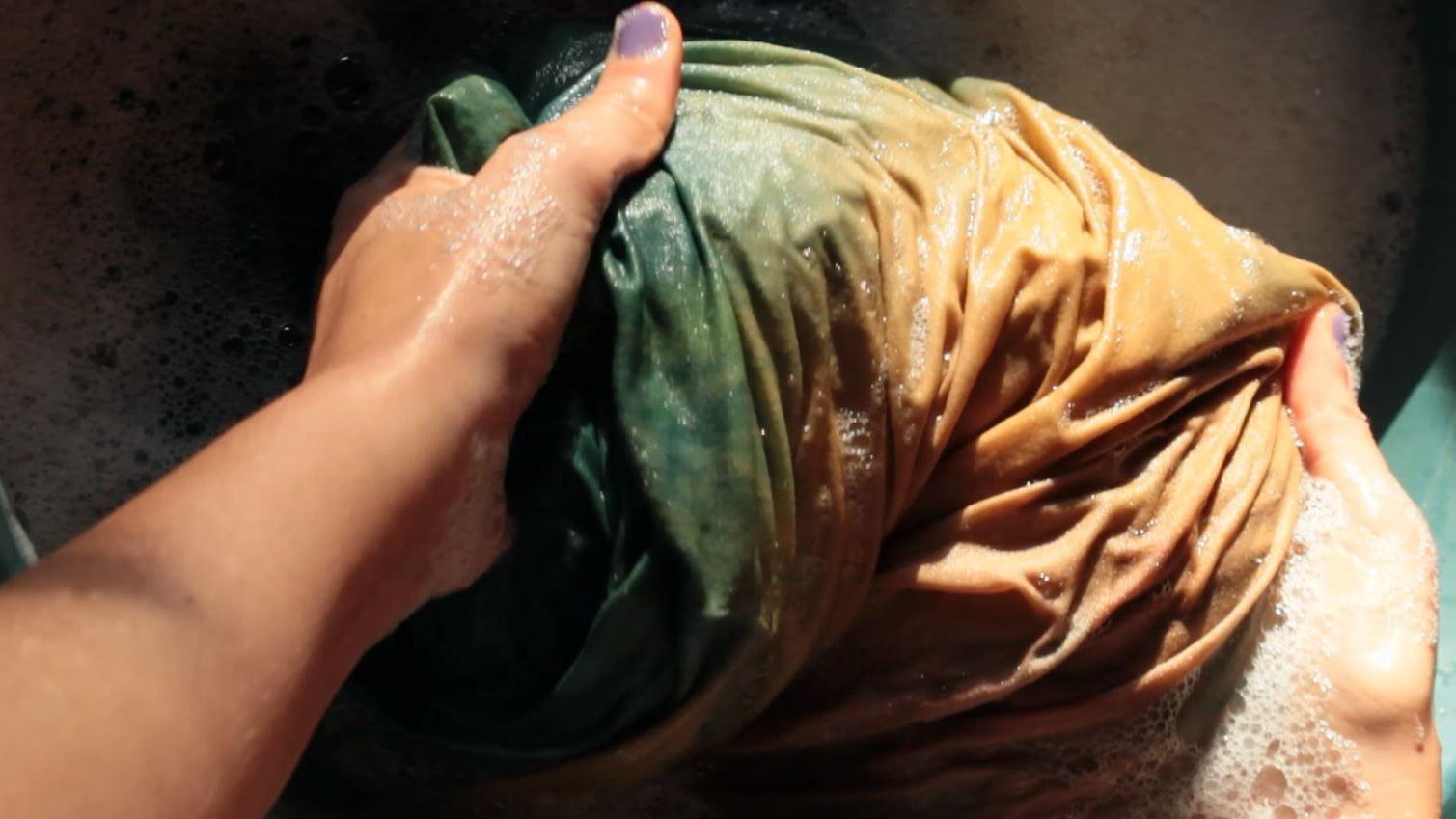
Wash by hand whenever possible, with gentle movements and no wringing. If using a machine, choose the delicate programme with minimal spin.
How to dry and store
Always dry in the shade. Direct sunlight is the enemy of almost all natural dyes — especially flavonoids such as those from onion and cosmos, which are photosensitive. Lay the piece flat or hang it on a hanger, without folds that would mark the wet fabric.
For storage, prefer airy places, away from direct light and moisture.
Indigo: specific care
Indigo deserves special attention due to its surface nature (the pigment deposits onto the fibre rather than penetrating the structure). In the first months, indigo may transfer colour slightly to other surfaces — especially leather or other white fabrics. This is normal and ceases as the surface layer stabilises.
The natural fading of indigo is part of the aesthetics of the piece. If you want to slow the process, avoid excessive friction and direct light. If you want to accelerate the natural ageing — creating that characteristic faded, vivid blue — use and wash it regularly.