The Work
Living colours
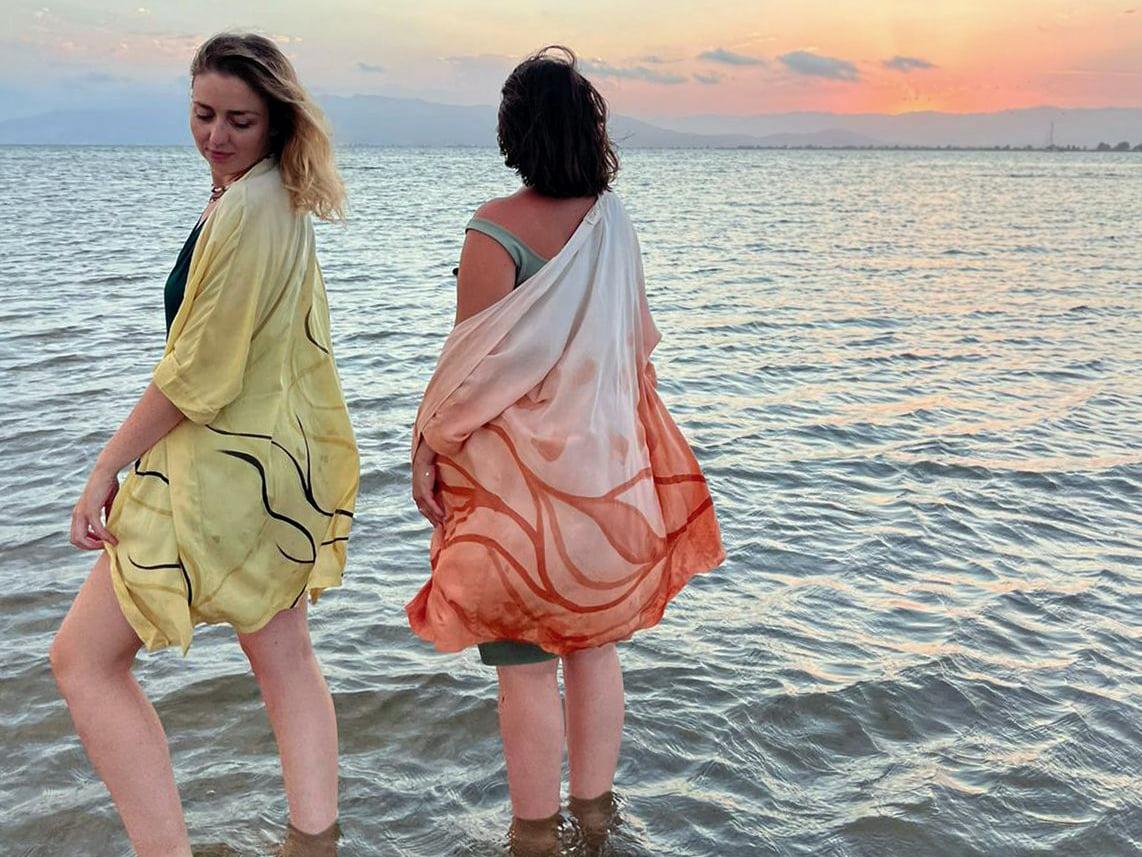
Living colour is not a metaphor. It is the result of the interaction between dye, fibre and process. The way we perceive colour shifts with the light, the angle, the surface of the cloth and the passing of time. Natural colour lives in relation. The colour is fixed in the fibre. Even so, it is never static. It transforms.
The same dye, different intensities
A dye bath does not produce a single colour. Each dip changes the concentration of dye left in the bath — the first piece comes out with the most intense colour; the second, a tone-on-tone shade; the third, a softer tone still. This is what we call an exhaust bath. In the atelier it is not waste — it is a whole scale of colours born from a single preparation.
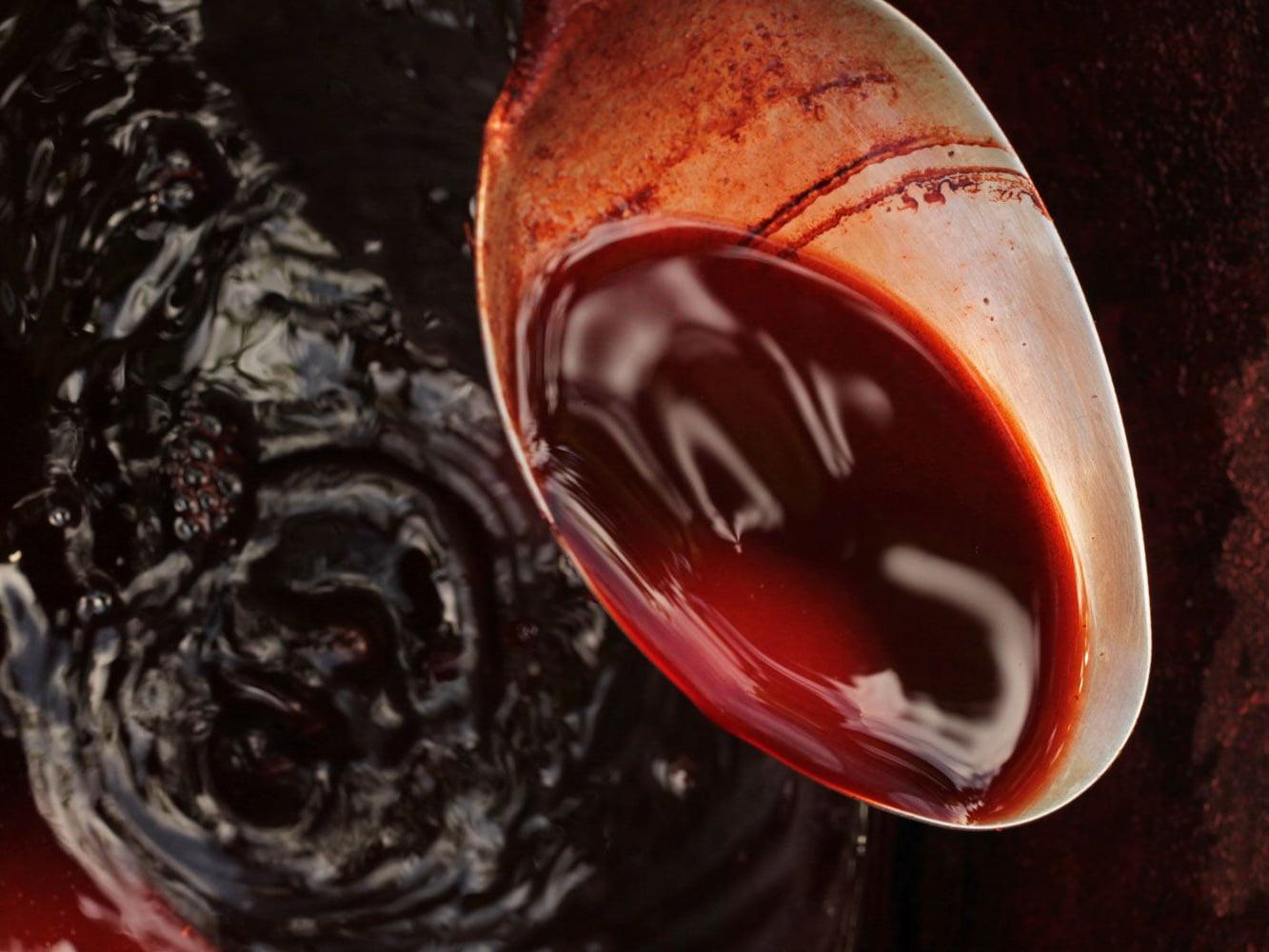
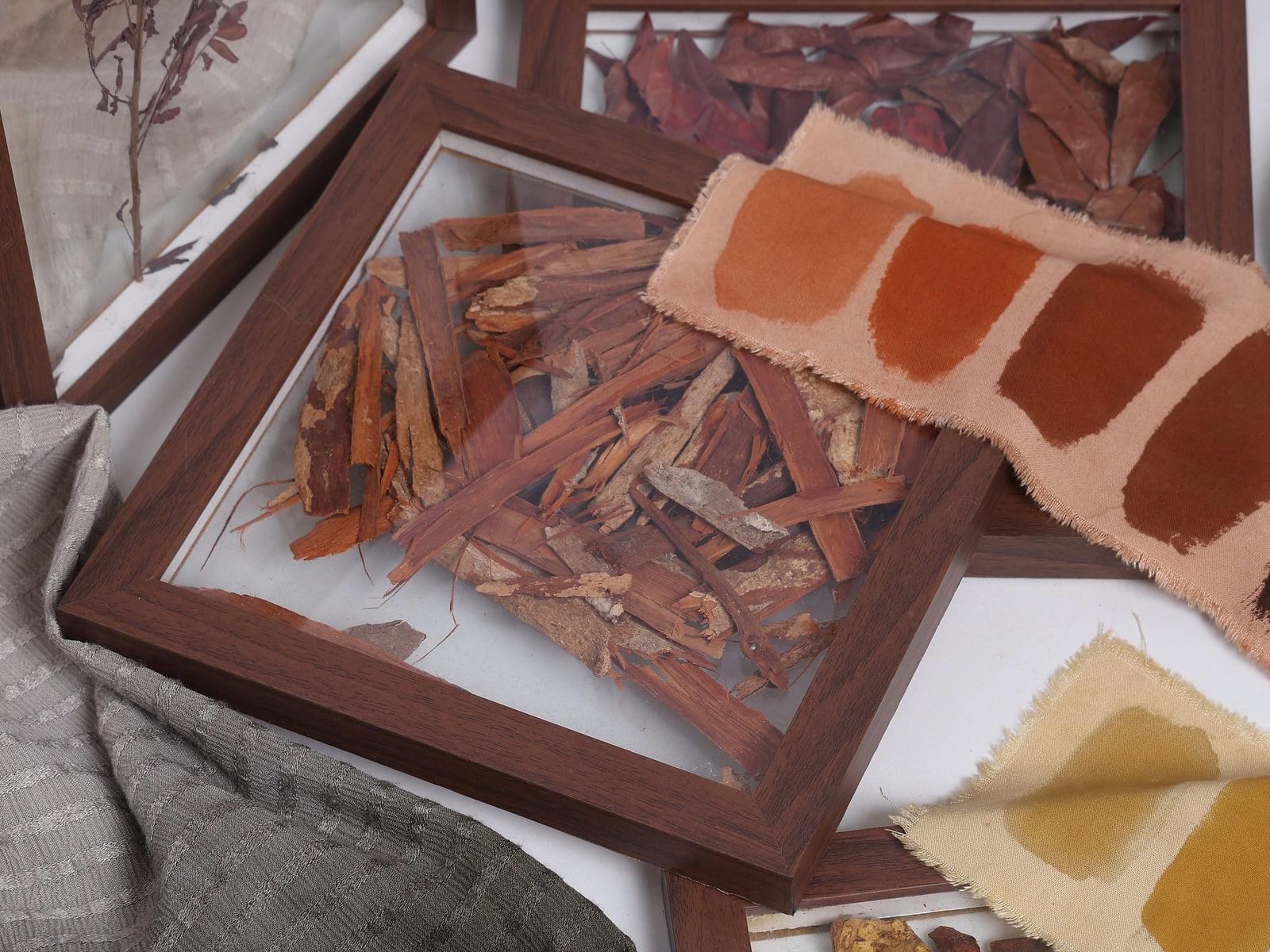
Catuaba — Trichilia catigua
Commonly known as catuaba, Trichilia catigua is a species widely distributed across Brazil.
Its bark, traditionally used in folk medicine, is rich in tannins and part of Lapso’s research into dyestuffs.
In dyeing, the bark reveals a range of colours that can move through orange, pink and brown tones, reaching greyer nuances.
The interaction with the fibre and the choices made throughout the process transform this palette, revealing different depths and temperatures of colour.
Crajiru — Fridericia chica
Crajiru is a plant native to tropical America, traditionally associated with the Amazon and other parts of South America.
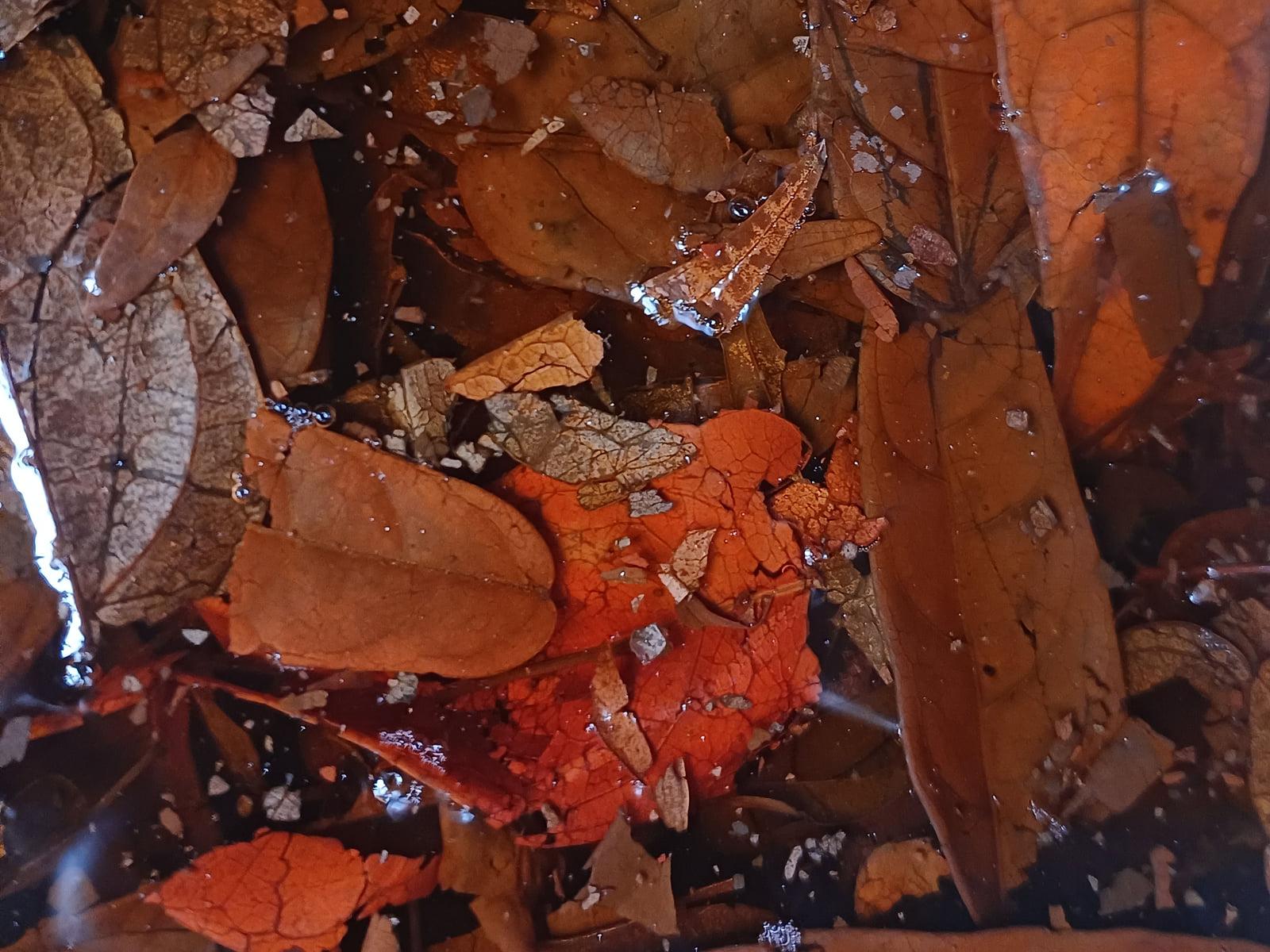
Also known as pariri or cipó-cruz, crajiru has long been used as a dye, especially from its leaves. It is rich in flavonoids, among them carajurin and carajurone, which account for much of its colour.
At the Lapso atelier, the leaves can be fermented in water for a few days before dyeing. The process reveals a range of colours from pinks and reds to deep reds and wine tones. With iron, the colour can deepen and move towards brownish and greyish nuances.
The same material reveals different possibilities of colour depending on the preparation, the fibre and the conditions of the process.
Indigo — Indigofera suffruticosa
Known in Brazil as anileira or anil, Indigofera suffruticosa is a species of tropical American origin widely distributed across the country.
Its leaves contain the precursors of indigotin, the molecule responsible for indigo blue.
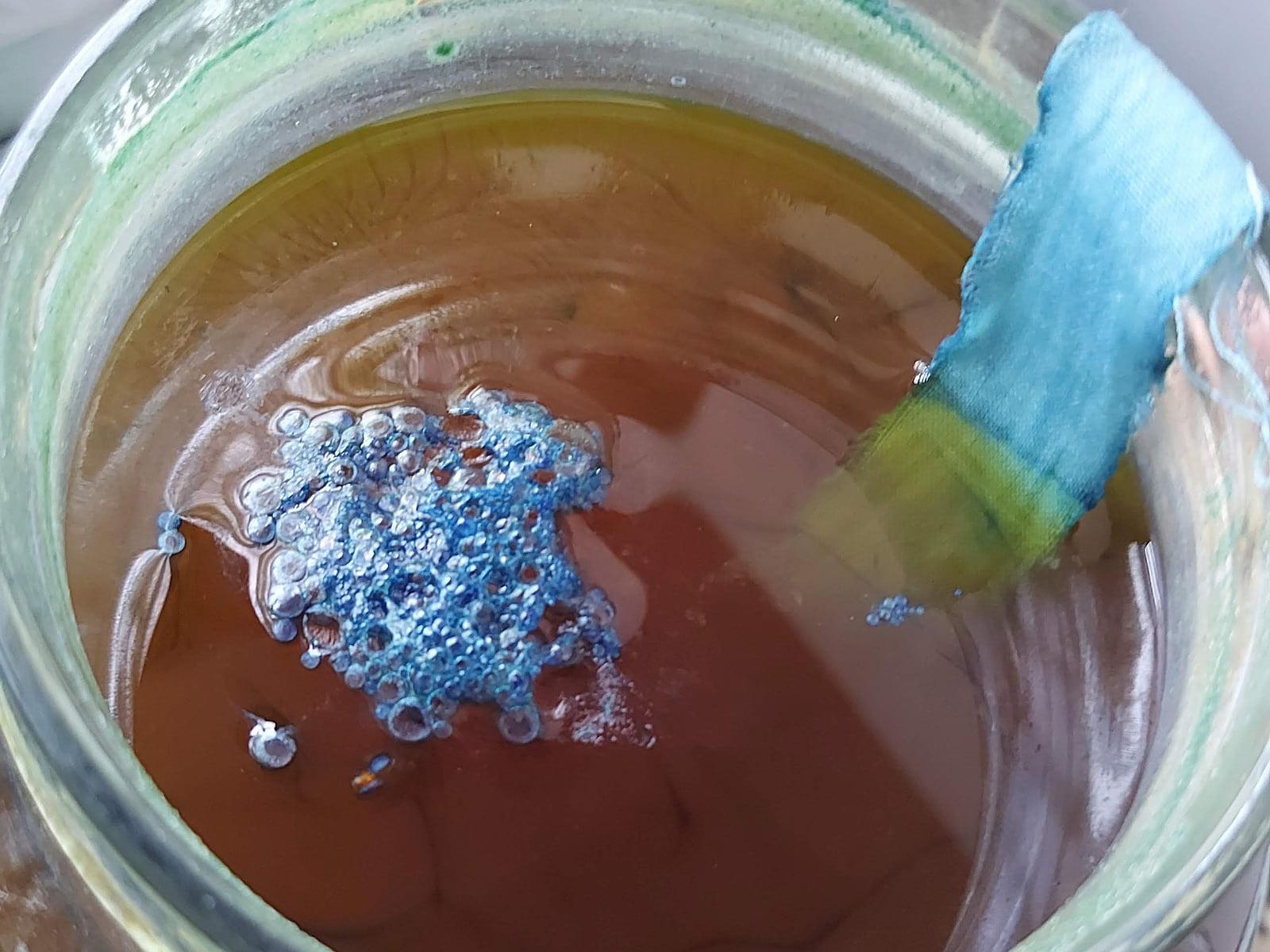
At the Lapso atelier, indigo is worked in a reduction vat. The dye has to be brought into a soluble form to penetrate the fibre and, on contact with oxygen, it oxidises and reveals the blue on the cloth.
The vat can be fed with ripe fruit, rich in sugars, which take part in the reduction process. It can take a few days to become active, depending on temperature, pH and concentration.
Each dip adds a new layer of colour. Between immersion and oxidation, the blue builds up little by little, from the palest blue to the deepest tones.
Every dip, every oxidation and every mark left on the cloth takes part in a colour topography of its own.
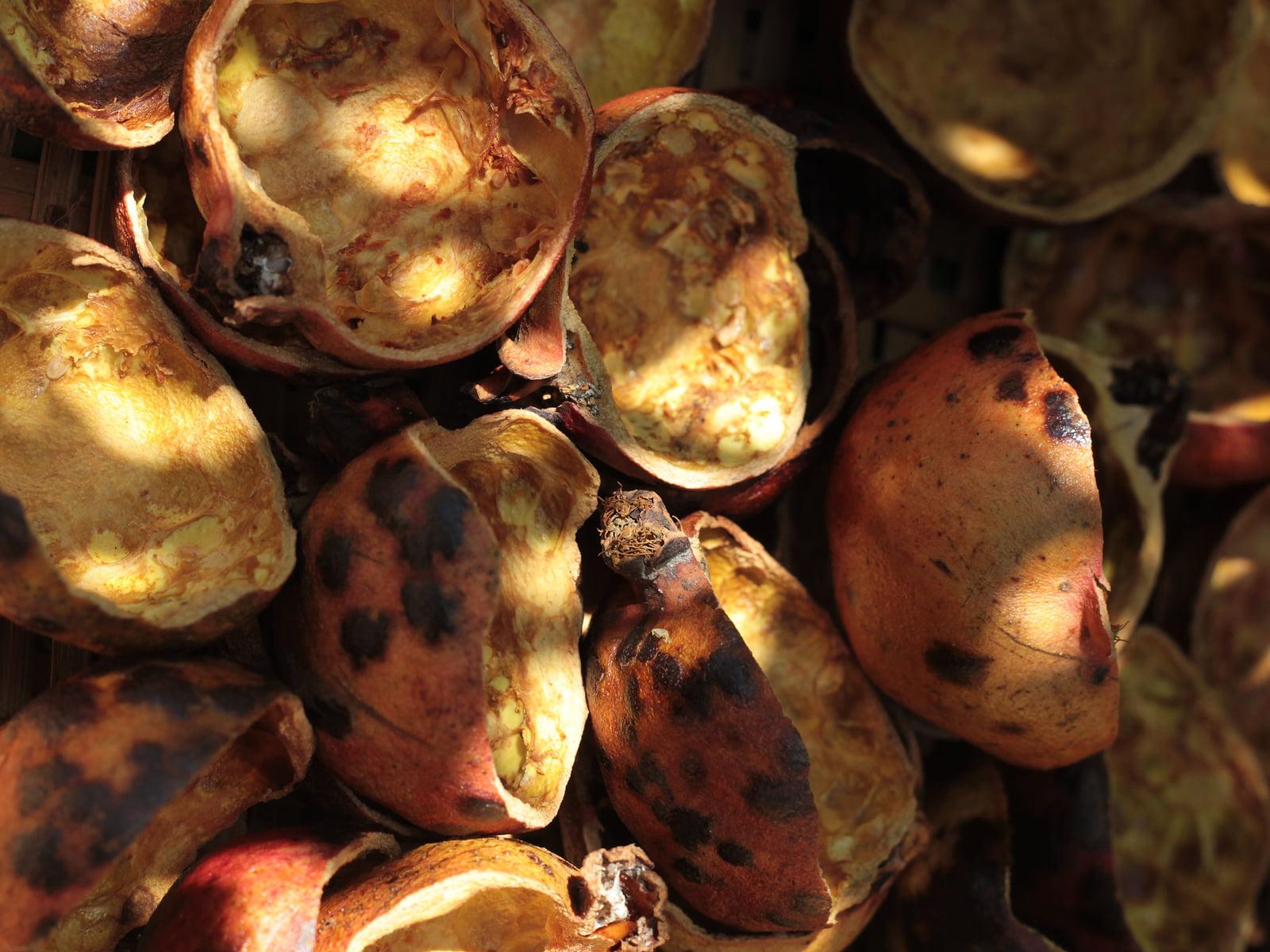
Pomegranate — Punica granatum
Native to the Mediterranean and Asia, pomegranate has been grown in Brazil for centuries.
Its rinds are rich in hydrolysable tannins, especially ellagitannins, as well as ellagic acid, which give the plant significant dye potential.
One curiosity of dyeing with pomegranate is that, despite the intense colour of the fruit, its coloured parts do not produce reds on cloth. The anthocyanins behind those tones are sensitive to light and to the process, while the tannins in the material mainly reveal a range of yellows.
In dyeing, pomegranate can run through a wide range of yellows, from soft pastels to the most vibrant. It can also reveal intense greens, greyish nuances and very deep tones, close to black.
Pomegranate shows how the colour of a raw material does not always decide the colour that stays on the cloth.
Mordanting — what turns colour into permanence
From the Latin mordere, “to bite”. Mordanting prepares the fibre to receive the dye and encourages more stable interactions between dye and cloth. Concentration, pH, temperature and bath time all decide the result.
Colourfastness does not depend on a single step. It comes from the interaction between the chemical class of the dye, the structure of the fibre, the mordant and the processing conditions. Mordanting creates part of the conditions needed for that fixation to happen.
Protein fibres, such as silk and wool, already have an affinity with natural dyes.
Cellulosic fibres, such as cotton, linen and viscose, need an initial tannin bath, which creates a base of affinity with the fibre and lets it bond later with potassium alum. In the atelier, each step — preparation, tannin bath, mordanting and dyeing — keeps to its own timing. The sequence and conditions of each bath affect both the intensity and the permanence of the colour.
Mordanting is not just preparing the cloth. It is building the conditions for the colour to last.
Aftercare is also part of the process: washing in cold water, using neutral soap and drying in the shade help preserve the dye over time.
Iron — colour modifier
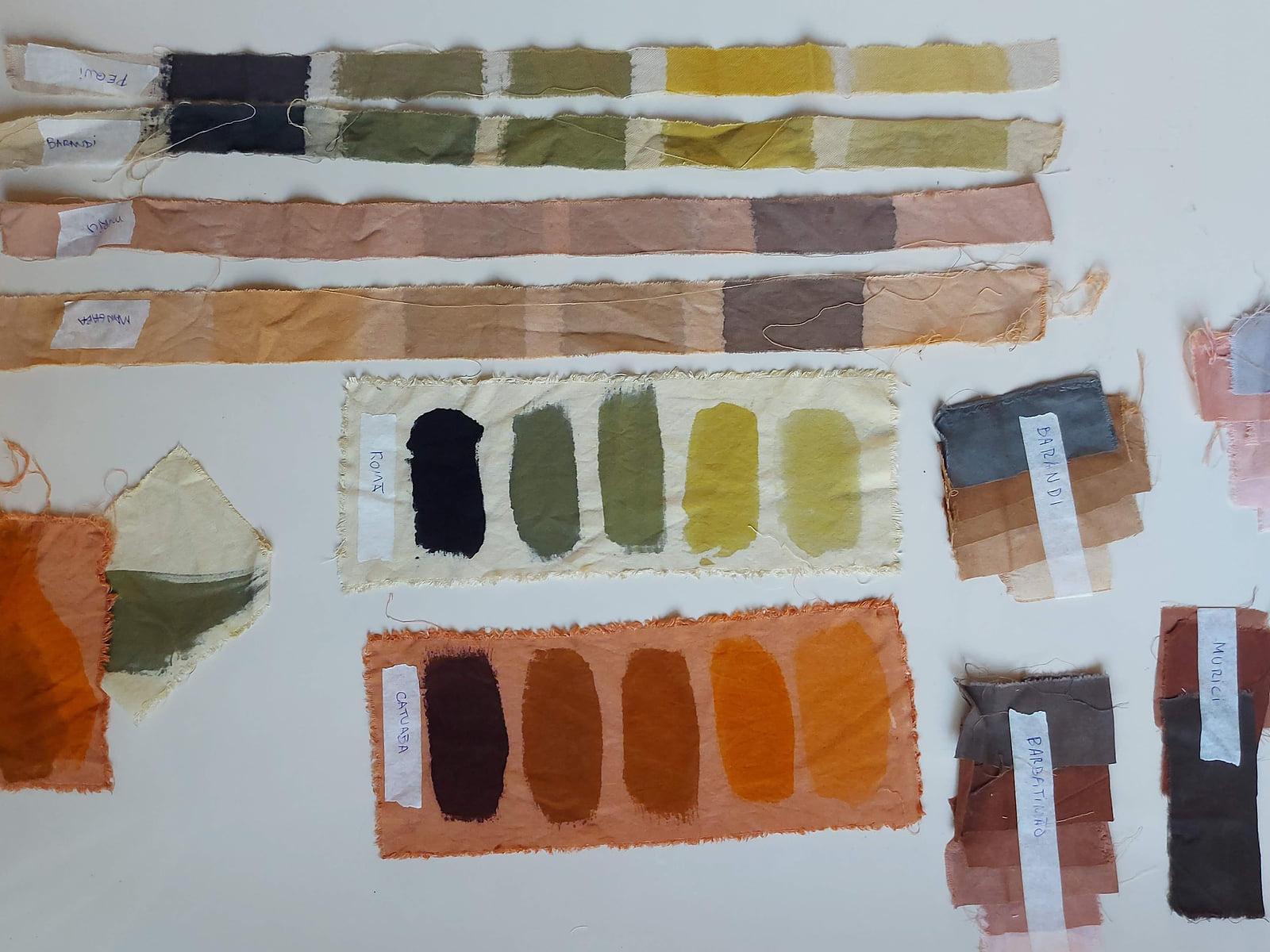
Iron is one of the most expressive modifiers in natural dyeing.
In the atelier, it can be used as ferrous sulphate or in preparations made from rusty nails and vinegar, changing the colour produced by the dye. A difference of 0.5% of the fibre weight can completely change the result.
Yellows can shift to greens and olive; reds to wine and deeper tones; browns can reach deep nuances, close to black.
Using an iron bath takes observation, experience and careful dosing, to get the greatest effect from the smallest amount.
Artistic effects — where process meets the unexpected
This is also where the name Lapso comes from: from deviations and results that were not planned. In natural dyeing, the interactions between material, dye, mordant, temperature and time can reveal unexpected results.
With experience, these deviations stop being mere chance. Observation makes it possible to understand the reactions and fold them into the creative process. It is in this space between control and discovery that Lapso builds its language.
The practice combines mixed and experimental techniques: painting with mordants, layering and varying dye concentrations, sun exposure, oxidation and botanical printing. Each procedure starts from technical knowledge, testing and observation.
The uniqueness of each piece comes from this meeting of process and intervention: noticing what happens, deciding what to keep and turning the unexpected into composition.